The Problem With Security Tools That Don't Think
Every year, enterprise security teams face a paradox: they have more data than ever, logs, alerts, network flows, endpoint telemetry, cloud events, and yet breaches keep happening faster than analysts can respond. The average time to detect a breach is still measured in days. The average time to contain it, in weeks.
The culprit is not a lack of tools. Enterprises deploy SIEM, EDR, SOAR, and IAM systems that collectively generate thousands of alerts per day. The culprit is that these tools don't reason. They pattern-match and escalate. They don't understand context, correlate intent, or autonomously decide what to do next.
That's the void Spharaka Networks was built to fill, and the SAGE AI Model is its most powerful answer yet.
The core insight: Security is fundamentally a reasoning problem. Adversaries think, adapt, and chain actions. Defenders need systems that can do the same, at machine speed, at scale, and without constant human supervision.
What Is SAGE™?
SAGE™ is Spharaka's proprietary AI model for autonomous cyber defence. It is a Cybersecurity SLM developed by fine-tuning state-of-the-art open foundation models using Spharaka's proprietary cybersecurity datasets, reasoning frameworks, and autonomous investigation technology. Unlike general-purpose LLMs (such as those used in consumer chatbots), SAGE™ is trained on a curated corpus of:
The result is a model that doesn't just generate text about security, it operates within a security context, making real decisions about real alerts in real time.
AuraXP™ and the Multi-Agent Architecture
SAGE™ doesn't operate in isolation. It is the reasoning core of AuraXP™, Spharaka's autonomous cyber defence platform and the world's first TrueXDR solution. AuraXP is built on a multi-agent AI architecture that deploys more than 40 specialized autonomous agents, each with a distinct role in the security kill chain.
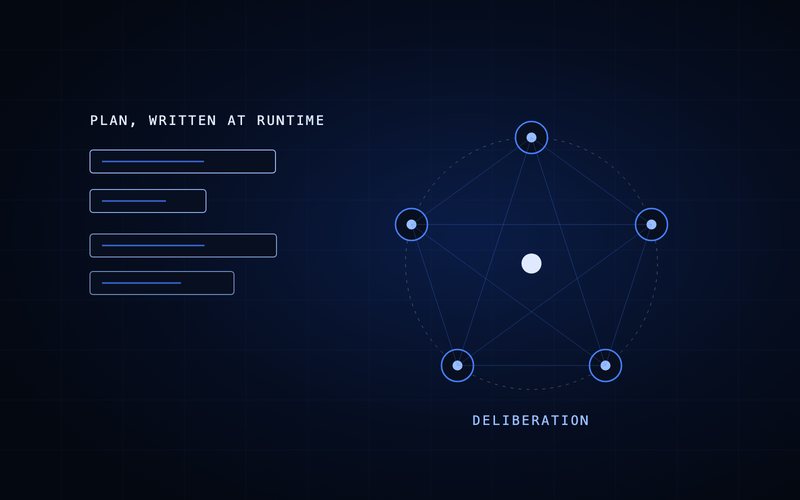
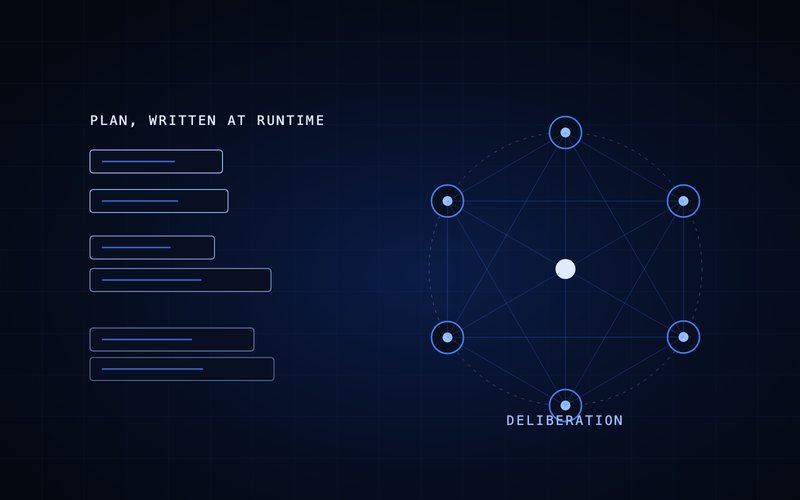
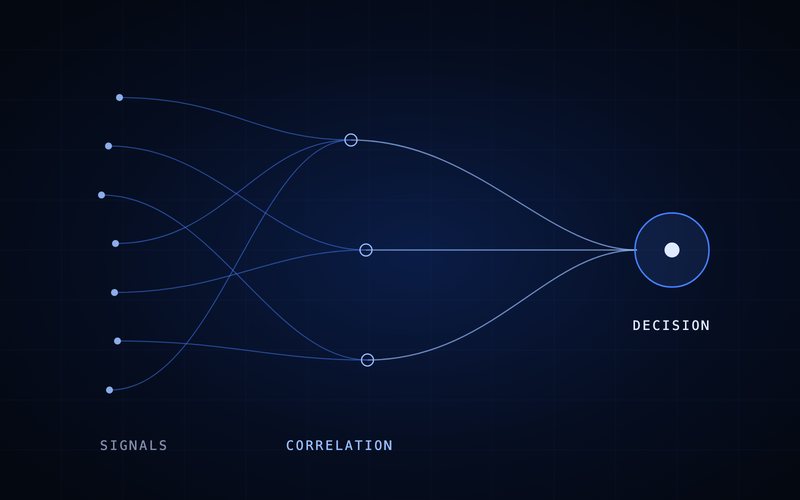
Think of it like this: each agent is a specialist, one watches network anomalies, another monitors identity behaviour, a third tracks lateral movement in cloud workloads. SAGE™ acts as the strategic coordinator, synthesizing signals from every agent, building a unified attack narrative, and determining the most effective response.
"With its multi-agent design, AuraXP leverages specialized autonomous agents that collaborate, similar to a distributed security team, to identify anomalies, predict risks, guide mitigation workflows, and execute defence actions. Backed by the SAGE AI Model, the platform understands context, learns continuously, and adapts its defence strategy automatically."- Spharaka Networks, Official Product Description
What Makes a "SAGE AI Model" Different From a General LLM?
This is one of the most important distinctions in enterprise AI today. A general LLM is trained to be broadly helpful across any topic. A SAGE AI Model is trained to be precisely effective in one domain: security.
| Capability | General LLM | SAGE AI Model |
|---|---|---|
| Security domain understanding | Superficial | Deep & purpose-trained |
| Real-time telemetry reasoning | Not designed for this | Native capability |
| MITRE ATT&CK alignment | General knowledge only | Embedded in model logic |
| Autonomous response actions | Cannot take action | Orchestrates multi-agent response |
| Compliance-aware reasoning | Generic | Sector-specific & regulatory-mapped |
| Continuous self-learning | Static after training | Learns from every incident |
| Alert fatigue management | Not applicable | Core design goal |
Key Capabilities of the SAGE AI Model
1. Contextual Threat Understanding
Where legacy tools fire alerts based on static rules, the SAGE AI Model builds an understanding of why an event is suspicious, factoring in the user's role, the asset's criticality, recent activity patterns, current threat actor campaigns, and the full kill chain context. A login at 3 AM might be noise for a global workforce. The same login after credential harvesting activity on a related endpoint is a confirmed threat.
2. Automated Incident Investigation
The LLM conducts what would take a senior analyst hours, automatically correlating events across endpoints, network, cloud, and identity planes, generating a step-by-step attack timeline, mapping it to MITRE TTPs, scoring severity, and producing an investigation report. Analysts receive a fully formed case, not a pile of raw alerts.
3. Natural Language SOC Interface
Security teams can interact with the platform in plain English, querying the environment, asking about specific users or assets, requesting threat hunting hypotheses, or asking 'what happened yesterday between 2 and 4 PM on this host?' The SAGE AI Model translates natural language into precise queries against the security data fabric.
4. Adaptive Policy Orchestration
Based on threat context and severity, the LLM automatically selects and executes response playbooks, isolating compromised hosts, blocking suspicious IPs, revoking access tokens, triggering firewall rule updates, or notifying ITSM systems, all within seconds, all logged with full auditability.
The organizational memory advantage: AuraXP's multi-agent system maintains a deep organizational memory, understanding the specific topology, user behaviour patterns, and asset relationships of your enterprise. Over time, the SAGE AI Model becomes intimately familiar with what "normal" looks like for your environment, making anomaly detection progressively more precise.
Industry Applications: Who Needs a SAGE AI Model?
The SAGE AI Model is purpose-built for organizations operating in complex, high-risk environments where both the threat surface and the regulatory stakes are elevated.
For BFSI institutions, the SAGE AI Model provides real-time detection of fraud patterns, account takeover attempts, and insider threats, while maintaining compliance with RBI, SEBI, and international financial regulations. For healthcare, it protects patient data and medical device networks while meeting HIPAA and DPDP requirements. For critical infrastructure, it guards operational technology (OT) and IT convergence zones that traditional security tools were never designed to protect.
Spharaka Sphere™: The Unified Autonomous Cyber Platform
At the centre of everything Spharaka builds is Spharaka Sphere™, the flagship product that makes the company genuinely different from every XDR, SIEM, or SOC automation vendor in the market today. Sphere is not a detection tool. It is not a response orchestrator. It is not an analytics dashboard. It is all of these things simultaneously, unified inside a single intelligent architecture.
The name comes from Sanskrit. Spharaka means "shield", and Sphere embodies that meaning architecturally: a complete, continuous, 360-degree defence layer that wraps around your entire digital ecosystem. Every endpoint, every identity, every cloud workload, every network flow, every third-party integration exists inside the Sphere's field of awareness.
The key distinction: Spharaka Sphere™ is not an Extended Detection and Response platform. It is an Autonomous Cyber Defence Platform, a category distinction that matters enormously. XDR collects and correlates. Sphere understands, reasons, and acts.
Five Verbs That Define Sphere
Spharaka describes AuraXP™, the agentic AI engine inside Sphere, through five core actions that together represent a complete security lifecycle no traditional tool can achieve alone:
Why "Not Just XDR" Is the Most Important Statement in Cybersecurity Right Now
The XDR category, Extended Detection and Response, emerged as an evolution beyond endpoint-only EDR. It promised unified visibility across endpoints, networks, and cloud. But in practice, most XDR platforms still require human analysts to investigate, contextualize, and decide on responses. They reduce alert volume but not analyst workload.
Spharaka Sphere™ is built on a fundamentally different premise: that the entire security lifecycle, not just detection, must be autonomous. This means:
| Capability | Traditional XDR | Spharaka Sphere™ |
|---|---|---|
| Cross-layer telemetry correlation | Yes | Yes, across 40+ agent domains |
| Autonomous investigation | Partial / manual | Fully automated case building |
| Natural language explanations | No | SAGE AI Model-generated, role-based narratives |
| Autonomous response execution | Playbook-gated, human-confirmed | AI-reasoned, fully autonomous |
| Organisational memory & learning | Static baselines | Continuous self-learning per environment |
| Unified platform (no silos) | Tool aggregation | Single unified architecture |
Spharaka's category is better described as Autonomous Cyber Defence, a platform where AI doesn't assist the security process, it is the security process, with humans in a governance and escalation role rather than a triage role.
The Technology Stack Behind Spharaka Sphere™
Layer 1: The Multi-Agent AI Architecture
Spharaka Sphere™ is built on a distributed architecture of more than 40 specialized autonomous AI agents, each operating with deep expertise in a specific security domain. There are agents dedicated to endpoint behaviour, network flow analysis, identity anomaly detection, cloud workload monitoring, email security, vulnerability correlation, lateral movement tracking, and more. Each agent operates continuously and independently, but none of them operates alone.
Layer 2: The SAGE AI Model
The agents are the sensors. The SAGE AI Model is the brain. This purpose-built large language model, trained on security telemetry, MITRE ATT&CK data, compliance frameworks, and annotated incident investigations, synthesizes signals from every agent into coherent threat narratives. It understands context. It prioritizes by risk. It communicates findings at the right level of abstraction for the right audience. And crucially, it reasons through response decisions rather than mechanically executing pre-written playbooks.
Layer 3: Organisational Memory
Sphere builds and continuously refines a deep model of your specific environment: your topology, user behaviour patterns, asset criticality, historical incidents, and normal operational rhythms. This organisational memory is what makes Sphere increasingly powerful over time: the longer it operates in your environment, the more precisely it can distinguish genuine anomalies from noise, and the more confidently it can act without human confirmation.
CLASS A Certified: Spharaka's services are CLASS A certified and follow established data community standards, providing enterprises with the assurance of independently verified security and data governance practices built into the platform itself.
Deployment Flexibility: SaaS, On-Premises, and Hardware Appliance
Recognizing that enterprise environments vary enormously in their data sovereignty, compliance, and infrastructure requirements, Spharaka Sphere™ offers three distinct deployment models:
Ecosystem Integration: Sphere Works With What You Already Have
One of Sphere's most practical advantages is that it doesn't require ripping out your existing security stack. Spharaka Sphere™ integrates seamlessly with the tools already in your environment:
SIEM platforms: Splunk, Microsoft Sentinel, IBM QRadar, and more, enriching your existing log management with autonomous reasoning.
EDR/XDR tools: CrowdStrike, SentinelOne, Microsoft Defender, the LLM correlates endpoint signals with broader environment context.
SOAR platforms: Palo Alto XSOAR, Splunk SOAR, Spharaka's autonomous actions complement and extend existing playbooks.
IAM & ITSM systems: Okta, ServiceNow, enabling seamless identity-aware response and automated ticket creation.
Cloud environments: AWS, Azure, GCP, native cloud security monitoring and response across multi-cloud architectures.
Multi-tenant architecture makes Sphere equally suited for large enterprises operating complex global environments and for MSSPs managing security operations for multiple clients simultaneously.
From Reactive to Predictive: The Intelligence Trajectory of Sphere
Spharaka Sphere™ doesn't just respond to threats; it learns from them continuously. Every incident, every investigation, every false positive and confirmed threat becomes a learning signal that refines the platform's understanding of your specific environment. Over time, Sphere transitions from reactive detection toward predictive threat intelligence, surfacing risks and anomalies before they consolidate into confirmed attacks.
The trajectory of enterprise cybersecurity is clear: from signature-based detection → behavioural analytics → autonomous AI response → predictive defence. Spharaka is building the infrastructure for that final leap. The SAGE AI Model is the reasoning engine that makes it possible. Sphere is the architecture that makes it real.
In an era where AI-powered adversaries generate novel malware, craft convincing phishing campaigns at scale, and probe for zero-days at machine speed, the only viable answer is a defender that operates at the same cognitive level, continuously, autonomously, and without limits on scale or availability. That is Spharaka Sphere™.
Frequently asked questions
Everything you need to know about Spharaka Sphere™, the SAGE AI Model, AuraXP™, and autonomous cyber defence.
What is SAGE™?
SAGE™ is Spharaka's proprietary AI model for autonomous cyber defence. It is a Cybersecurity SLM developed by fine-tuning state-of-the-art open foundation models using Spharaka's proprietary cybersecurity datasets, reasoning frameworks, and autonomous investigation technology.
What is Spharaka Sphere™ and how is it different from XDR?
Spharaka Sphere™ is a unified autonomous cyber defence platform, not an XDR product. While XDR platforms correlate telemetry across security layers, they still rely on human analysts for investigation and response decisions. Sphere goes further: it detects, investigates, explains, reasons, and responds autonomously using a multi-agent AI architecture and SAGE™. It also covers capabilities that no XDR addresses, such as organisational memory-based adaptive learning.
How does SAGE™ differ from ChatGPT or general-purpose LLMs used for security?
General LLMs like ChatGPT are trained on broad internet data and lack deep, real-time security context. SAGE™ is a proprietary Cybersecurity SLM fine-tuned on curated security datasets, continuously updated with live threat intelligence, and designed to operate inside a multi-agent architecture, making it far more accurate and actionable in a security operations environment. It can also take real actions (isolating hosts, blocking IPs, triggering playbooks) rather than just generating text responses.
What is AuraXP™ and what role does it play inside Spharaka Sphere™?
AuraXP™ is the Agentic AI Native Technology that powers Spharaka Sphere™. It is the operational engine that runs the 40+ specialized autonomous agents, orchestrates their activity, and integrates with SAGE™ to produce cohesive threat intelligence and execute autonomous response actions. Spharaka Sphere™ is the product, AuraXP™ is the technology framework that drives it.
Does Spharaka Sphere™ replace human security analysts?
No, Spharaka Sphere™ is designed to augment human analysts, not replace them. It handles the high-volume, repetitive work of alert triage, routine investigation, and automated response, dramatically reducing alert fatigue. This frees analysts to focus on strategic threat hunting, complex incident management, and decisions that genuinely require human judgment. The platform acts like an always-on Level-1/Level-2 analyst team operating continuously in the background.
How does Spharaka Sphere™ handle zero-day threats and unknown attacks?
Sphere uses behavioural analytics to detect deviations from established baselines rather than relying solely on known signatures. When behaviour deviates from the norm, even without a matching CVE or IOC, the system flags and investigates it. Continuous learning means the model's baseline understanding of 'normal' evolves with your environment, making it progressively better at surfacing novel threats including zero-days and AI-generated malware.
Which industries is Spharaka Sphere™ best suited for?
Spharaka Sphere™ is purpose-designed for high-risk, highly regulated sectors: BFSI (banking, financial services, insurance), telecommunications, healthcare, critical infrastructure (energy, water, utilities), government and defence, manufacturing, and cloud-first enterprises. The platform is equally suited to lean SMBs looking for enterprise-grade protection and Fortune 500 organizations running complex global SOCs.
Is Spharaka Sphere™ available on-premise or only in the cloud?
Spharaka Sphere™ offers three deployment modes: a SaaS cloud deployment with a pay-as-you-go model; a fully on-premises deployment for organizations with strict data sovereignty requirements (defence, research, national security); and a hardware appliance option launching soon for environments requiring physical control of the security layer. Multi-tenant architecture also makes it suitable for MSSPs managing multiple enterprise clients.
What does 'agentic AI' mean in the context of Spharaka?
Agentic AI refers to AI systems that operate with goals and autonomy. They can perceive their environment, reason about what to do, take actions, and adapt based on results, all without requiring human input at each step. In Spharaka's context, AuraXP's 40+ specialized agents each exhibit agentic behaviour in their security domains, coordinated by SAGE™ as the reasoning backbone. This is fundamentally different from AI tools that only respond to queries. Spharaka's agents proactively defend.
About the Author
Vishnu Nair is a Founding Member and Director of Growth and Partnerships at Spharaka Networks™. Connect on LinkedIn.
Ready to see Spharaka Sphere™ in action?
Discover how Spharaka Sphere™ powered by AuraXP™ can transform your security operations, from reactive alert management to autonomous, intelligent defence.