Machine-speed attacks arrived before machine-speed defence
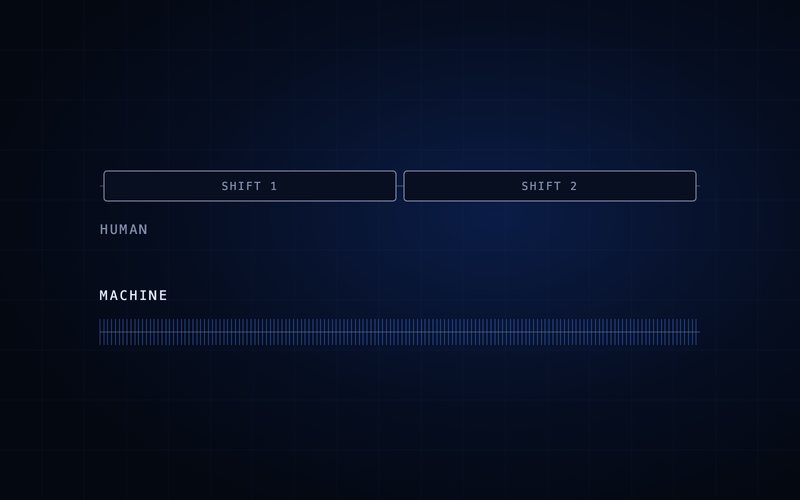
In late 2025, Anthropic disclosed something the security industry had long predicted but hoped was further away: a large-scale espionage campaign in which AI agents, not human operators, performed the bulk of the intrusion work. Reconnaissance, exploitation, lateral movement, and data collection were orchestrated by software that never slept, never got bored, and never waited for a shift change.
Around the same time, researchers tracked campaigns using open-source AI attack tooling to compromise hundreds of perimeter devices across dozens of countries in a matter of days. The significance was not any single breach. It was the unit economics. An attack that once required a skilled team working for weeks could now be executed by a modestly skilled operator supervising a fleet of autonomous agents.
This is the context in which Gartner published its Hype Cycle for Security Operations, 2026. Read casually, it is a catalog of technologies at various stages of maturity. Read carefully, it is something closer to an obituary for an entire generation of security architecture, and a set of coordinates for what replaces it.
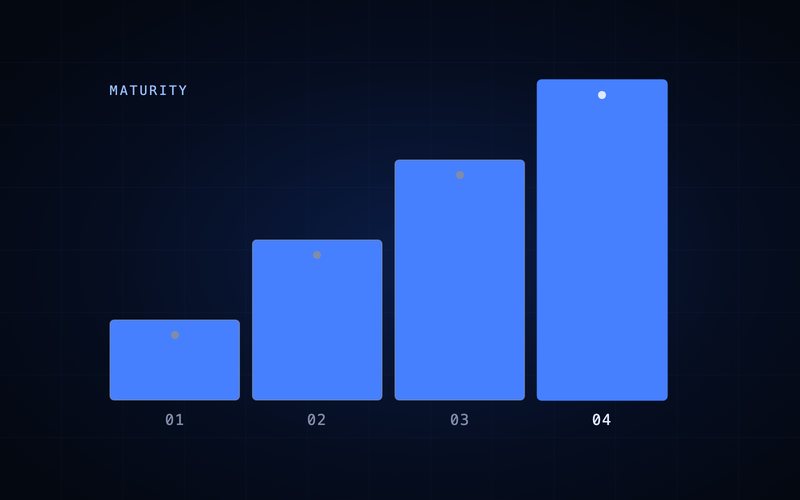
The report describes an industry that is not evolving gradually but aggressively correcting course: legacy detection architectures under challenge, exposure management displacing point-in-time vulnerability scanning, and threat intelligence being rebuilt around context rather than raw indicators. Beneath the vendor categories and maturity curves sits one uncomfortable conclusion for security leaders.
The SOC was built for a different war
To understand why security operations is breaking, it helps to remember what the modern SOC was actually designed to do.
The SIEM-centered operating model emerged in the mid-2000s to solve a visibility problem. Logs were scattered across firewalls, servers, and applications; the SIEM centralized them, correlated them against rules, and raised alerts for humans to investigate. SOAR arrived a decade later to script the repetitive parts of response. XDR promised to collapse detection and response into a tighter, vendor-curated loop.
Each layer was rational in isolation. Together, they produced an architecture with three structural flaws that no amount of tuning can fix.
First, the economics stopped working. Gartner observes that legacy ingest-based licensing pushes organizations into an impossible choice: ingest everything and watch costs spiral, or ingest selectively and accept blind spots. Security teams now practice what amounts to concession engineering, deliberately deciding which threats they can afford to see. The rise of security data lakes as a Hype Cycle category is a direct market response to this pricing failure, offering cheaper, more flexible storage and retention outside the traditional SIEM meter.
Second, the human does not scale. Every alert the stack generates still terminates, eventually, at a person. Analyst teams triage thousands of alerts per day, close the majority as false positives, and burn out doing it. Hiring more analysts is not an answer; the talent does not exist at the required volume, and even if it did, human triage speed is a constant while attack speed is not.
Third, the stack fragmented faster than it integrated. The average enterprise runs dozens of security tools, each with its own console, data model, and partial view of the environment. Gartner's continued tracking of cybersecurity mesh architecture reflects how acute the integration problem has become: organizations are now buying architectural connective tissue just to make their existing purchases interoperate. Meanwhile XDR, the category once positioned as the integration answer, is being absorbed as a feature layer inside larger platforms. Gartner now expects standalone XDR to become obsolete before it ever reaches the plateau of productivity, one of the clearest signals in the entire report that point products, however well-executed, cannot survive as islands.
The result is a paradox familiar to every CISO. Security budgets have never been larger, tooling has never been more capable, and yet dwell times, breach costs, and analyst attrition remain stubborn. The problem is not effort. It is architecture.
What Gartner is actually seeing
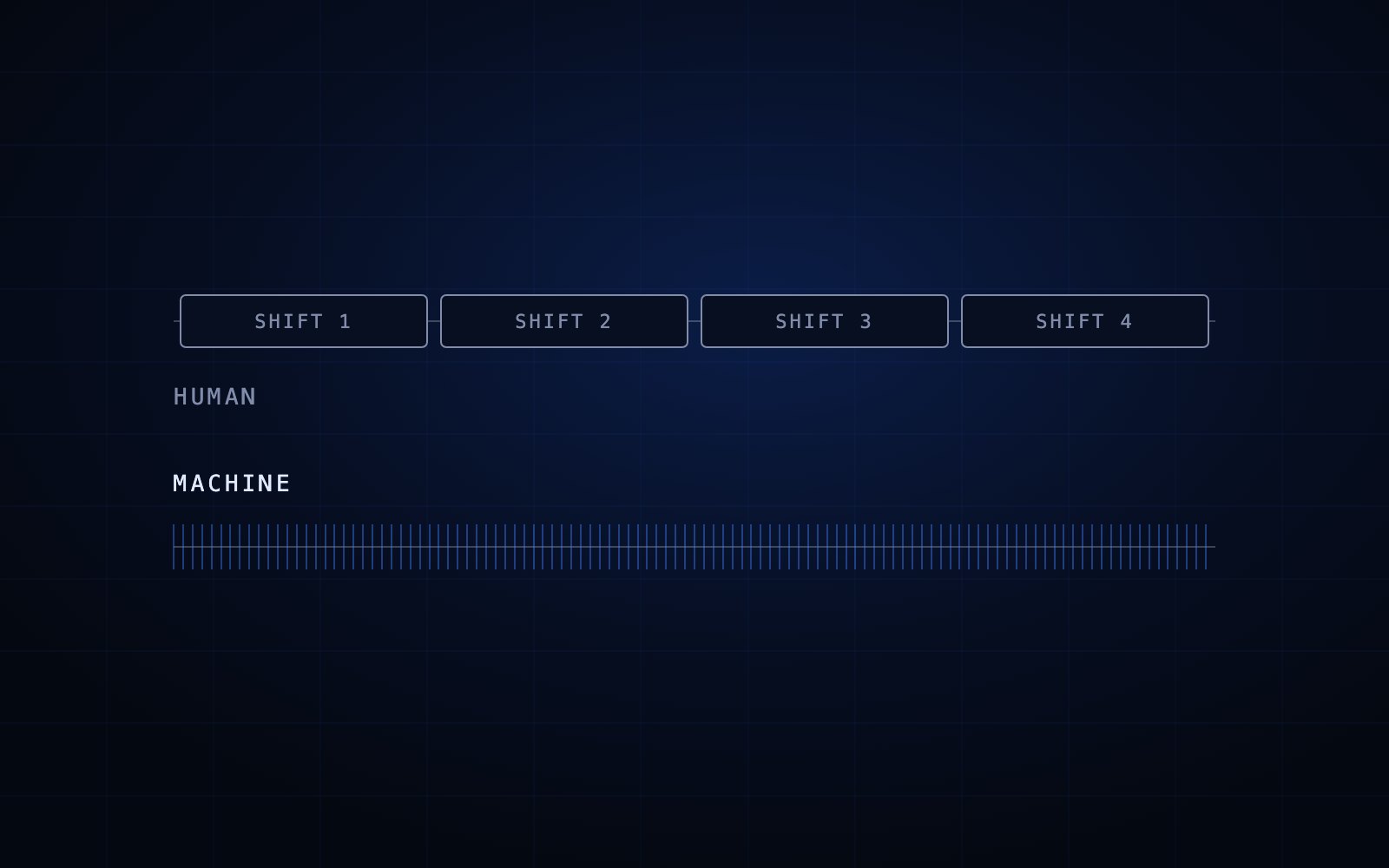
Three structural shifts run through the 2026 Hype Cycle, and they are worth stating plainly because together they describe the shape of the next-generation SOC.
Shift one: TDIR architectures are being challenged. The traditional market for threat detection, investigation, and response is splitting. Buyers frustrated with SIEM cost and complexity are migrating toward two alternatives: security data lakes for organizations that want flexible, economical telemetry storage, and integrated SOC systems for organizations that want a unified, out-of-the-box detection and response stack from a single platform rather than a self-assembled toolkit. In both cases the direction of travel is identical, away from fragmented, assemble-it-yourself architectures and toward integrated systems judged on their output as a whole.
Shift two: proactive security is displacing reactive security. Continuous threat exposure management (CTEM) has moved from concept to operating priority. Vulnerability management is evolving into threat exposure management. Adversarial exposure validation, the continuous, automated testing of whether attacks actually succeed against your environment, is replacing annual penetration tests. Even remediation itself is being reimagined: Gartner now profiles autonomous exposure remediation, an embryonic discipline in which AI agents do not merely find weaknesses but fix them. The philosophical shift is profound. The question is no longer what alerts fired today, but what could an attacker do to us right now, and is it already being closed.
Shift three: intelligence is being rebuilt around context. Gartner describes a threat intelligence makeover in which organizations abandon narrow indicator feeds in favor of curated, contextualized, actionable intelligence. Cyberthreat intelligence management systems are emerging as dedicated workbenches for tracking adversary campaigns. Unified cyber risk intelligence goes further, fusing external threat signals with internal telemetry so that organizations can map adversary intent onto their own specific exposures. The through-line: raw telemetry and raw indicators are commodities. Contextual intelligence, the ability to know what a signal means in your environment, is the scarce asset.
And cutting across all three shifts is the report's most consequential observation about AI itself: expectations are pivoting rapidly from passive assistance to autonomous operation. That pivot deserves its own examination, because it is where most organizations are about to make an expensive mistake.
The copilot trap
The first generation of AI in the SOC arrived as the copilot: a chat interface bolted onto an existing console that could summarize an alert, explain a PowerShell command, or draft an incident report.
Copilots are genuinely useful. They are also architecturally conservative in a way that limits their ceiling. A copilot accelerates a human workflow, but the human remains the workflow. Every investigation still begins when an analyst opens a ticket and ends when an analyst renders a verdict. If your SOC receives ten thousand alerts a day and can humanly investigate four hundred, a copilot that makes each investigation 30 percent faster gets you to five hundred and twenty. The other nine thousand alerts still go uninvestigated.
The math matters because attackers no longer operate at human speed either. When an intrusion progresses from initial access to lateral movement in minutes, a system whose response time is bounded by human availability has already lost, no matter how good its summaries are.
There is a second, subtler problem. Most copilots are thin wrappers around general-purpose foundation models accessed through public APIs. That creates two liabilities that security leaders have been slow to price in. The first is data exposure: alert payloads, internal hostnames, and identity data flowing to external model providers, a practice that ranges from uncomfortable to prohibited depending on your regulator. The second is grounding: a generalist model reasoning about your environment without knowledge of your assets, your identities, or your normal, is guessing eloquently. In security, eloquent guessing is called a false verdict.
Gartner's framing is appropriately sober here. AI SOC agents are rated embryonic, with benefits described as promising but largely unproven, and the report explicitly urges buyers to pilot rigorously and demand measurable improvement over their current baseline. That skepticism is healthy, and it points at the real question. The issue is not whether AI belongs in the SOC. It is what architecture allows AI to be trusted with more than assistance.
Illustrative arithmetic from this article.
Why specialized agents beat general assistants
The answer emerging across the industry, and visible in Gartner's newest profiles, is agentic AI: not one assistant that answers questions, but many specialized agents that perform work.
The distinction is architectural, not cosmetic. An agent has a defined role (triage, enrichment, correlation, hunting, containment), access to specific tools and data, and the autonomy to complete a bounded task without a human initiating each step.
Multiple agents collaborate the way a well-run SOC team does: one enriches an alert with asset and identity context, another reconstructs the attack timeline, another checks the finding against threat intelligence, another proposes or executes containment, and a coordinating layer maintains the overall picture.
This division of labor solves problems that monolithic assistants cannot.
- Coverage. Agents investigate every alert, not the fraction humans reach. The concession engineering that has quietly defined SOC operations for a decade becomes unnecessary when investigation capacity is elastic.
- Consistency. An agent performs the two-thousandth investigation with the same rigor as the first. Humans demonstrably do not.
- Speed. Investigation and containment compress from hours to minutes or seconds, which is the only timescale that matters against automated attacks.
- Verifiability. Because each agent has a narrow mandate, its reasoning and evidence trail can be inspected, tested, and improved, which is precisely the diligence Gartner urges buyers to demand.
The model question: why dedicated cybersecurity LLMs matter
If agents are the workforce, the language model is the education. And here the industry is converging on a conclusion that would have sounded contrarian two years ago: for security operations, a specialized model that knows your environment outperforms a frontier model that knows everything else.
Domain reasoning. Security work is a dense, specialized language of TTPs, detection logic, log semantics, and adversary behavior. Models trained vertically on this domain reason about it more reliably than generalists, and recent open research on cybersecurity-specific models has repeatedly shown domain-trained models outperforming much larger general-purpose baselines on security tasks. Scale is not a substitute for relevance.
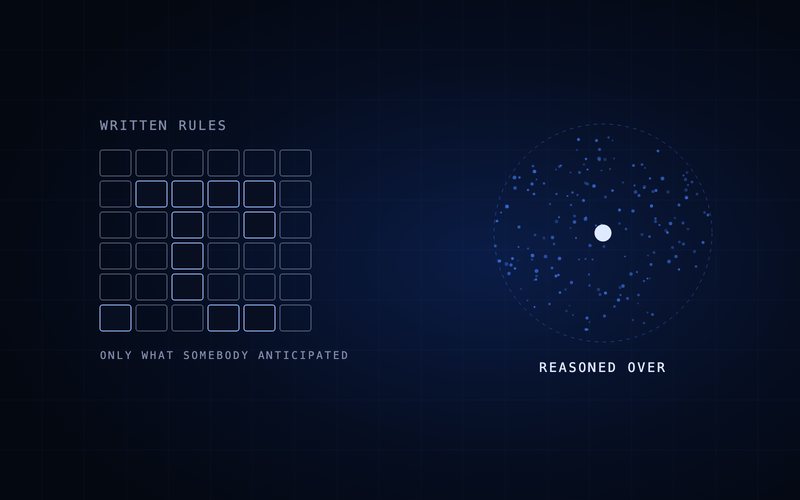
Grounding. The hardest part of any investigation is not knowledge of attacks in general; it is context about this environment in particular. Is this login anomalous for this user? Is this server supposed to talk to that database? A model without environmental grounding cannot answer these questions, which is why retrieval-augmented generation over an organization's own asset inventory, identity context, and behavioral baselines is not an optional enhancement. It is the difference between reasoning and guessing. This is also where persistent memory earns its place: a platform that retains what it learned from last month's incidents investigates this month's differently.
Sovereignty. Security telemetry is among the most sensitive data an enterprise holds. Architectures that route it through public AI APIs create a dependency and an exposure that many regulated industries, and most governments, will not accept. Gartner's audience in banking, telecom, healthcare, and critical infrastructure increasingly treats where does the model run, and who else touches my data, as a first-order procurement question.
Spharaka's answer to all three is instructive because it is architectural rather than incremental. SAGE™, its vertically trained cybersecurity LLM, runs as a dedicated model within each customer's deployment, grounded through customer-specific retrieval in that organization's own assets, identities, and behavioral norms, with no dependency on public AI models. The platform deploys on-premises, including in environments without internet connectivity, which makes it viable for the air-gapped and data-sovereign contexts where cloud-only AI simply cannot go. For a defense contractor, a central bank, or a power utility, that is not a feature preference. It is the entry ticket.
Autonomous investigation changes the economics of defense
Step back and the strategic significance of all this becomes clear. Autonomous investigation does not just make the SOC faster. It changes the cost structure of defense, and cost structures are what decide industry transitions.
For twenty years, defensive capacity has scaled linearly with headcount, while attack capacity now scales with compute. That divergence is the asymmetry every CISO feels but rarely names. Autonomous investigation is the first defensive capability that scales the same way attacks do. When every alert is investigated, false positive floods stop being an operational crisis and become a tuning signal. When containment executes in seconds, dwell time stops being measured in days. Spharaka reports average alert analysis times of roughly a minute on its platform; the precise number matters less than the order of magnitude, which is simply unreachable by human process.
The same logic extends to the proactive side of the house. Autonomous threat hunting turns hunting from an occasional luxury for mature teams into a continuous background process. Detection engineering, which Gartner notes is evolving from ad hoc analyst craft into a formalized, automated SecOps discipline, becomes a loop in which the platform proposes, tests, and refines detections against live context. And continuous validation, the beating heart of CTEM, becomes feasible at last, because validating exposures continuously only works if something is available to investigate and act on the findings continuously.
This is why the honest comparison is not between an AI SOC and a well-run traditional SOC. It is between two operating models with different physics.
Architecture matters more than features
There is a pattern in enterprise technology transitions worth naming, because security operations is living through it now. Incumbent categories rarely die because a competitor builds a better version of them. They die because the architecture around them changes, and the category stops making sense as a standalone thing.
That is what the 2026 Hype Cycle documents. SIEM is not being beaten by a better SIEM; it is being unbundled by security data lakes on the data side and re-bundled by integrated platforms on the operations side. SOAR is not being beaten by better playbooks; static playbooks are giving way to agents that construct response plans dynamically from context. XDR is not being beaten by a better XDR; it is dissolving into platforms as a feature. Threat intelligence feeds are not being beaten by bigger feeds; they are being displaced by fused, contextual risk intelligence.
In each case, the losing position is the same: a point product that owns a slice of the workflow and exports its output to a human. The winning position is also the same: an integrated architecture in which detection, investigation, intelligence, exposure management, and response share one data foundation, one contextual understanding of the environment, and one coordinating intelligence.
Evaluated against that standard, the design choices behind Spharaka Sphere™ read less like a feature list and more like a bet on where the architecture lands. A single platform that unifies SIEM, SOAR, XDR, and UEBA functions rather than stitching them together. A multi-agent layer, AuraXP™, as the coordinating intelligence. A dedicated, vertically trained model, SAGE™, as the reasoning core, grounded in each customer's own context. Behavioral analytics and attack surface visibility feeding the same brain that investigates and responds. Integration with the existing SIEM, EDR, IAM, and ITSM estate, because no enterprise replaces its stack overnight, an autonomous layer has to meet the environment where it is. And deployment on the customer's terms, on-premises and sovereign where required.
None of this exempts any vendor, Spharaka included, from the diligence Gartner prescribes. AI SOC technology is young; buyers should baseline their current operations, pilot against real workloads, and demand measurable gains. But the direction of the architecture is no longer seriously in dispute. The debate has moved from whether security operations becomes agentic and autonomous to which architectures get there credibly, and the credible ones share a recognizable shape: integrated, agent-based, contextually grounded, and sovereign by design.
Where this is heading: security operations in 2030
Predictions in security age badly, so consider these less as forecasts than as extrapolations of forces already visible in the 2026 Hype Cycle.
By 2030, the alert queue will no longer be the organizing principle of security operations. Autonomous investigation of every signal will be table stakes, and the differentiating questions will move up the stack: how good is the platform's contextual understanding of my environment, how well does it validate and close exposures before they are exploited, and how transparently can I audit what my agents decided and why.
The SOC analyst role will not disappear, but it will invert. Instead of humans doing investigations assisted by machines, machines will do investigations supervised by humans. The scarce skills will be detection engineering, adversary emulation, AI oversight, and the judgment to handle the genuinely novel. Teams will be smaller, more senior, and considerably less miserable.
Security will also finally become proactive in more than name. CTEM, continuous validation, and unified cyber risk intelligence converge on a single operating question, asked and answered continuously by machines: what can hurt us right now, and is it already being fixed? Organizations still organized around reacting to alerts will find themselves defending against 2030 attackers with a 2015 operating model.
And the defining divide of the decade will not be AI versus no AI. Every vendor will claim AI. The divide will be between architectures where AI is a feature bolted onto fragmented tooling and architectures where AI is the system itself: agentic, environment-aware, autonomous within governed bounds, and running wherever the data must live.
The Gartner Hype Cycle for Security Operations, 2026 does not name a winner. Hype Cycles never do. What it does, unmistakably, is describe the end of one architecture and the outline of the next. The organizations that read it that way, and choose platforms accordingly, will be the ones for whom the machine-speed decade is an advantage rather than an obituary.
Eight actions for security leaders
The practical implications of the report can be reduced to eight decisions worth making this quarter rather than next year.
- Audit your SIEM economics honestly. If ingest pricing is forcing you to choose which telemetry to keep, you are already accepting engineered blind spots. Evaluate security data lakes and integrated platforms against your real retention and detection needs.
- Treat copilots as a bridge, not a destination. Adopt AI assistance where it helps today, but architect toward autonomous investigation. The gap between faster human triage and every alert investigated is where breaches will live.
- Baseline before you buy. Follow Gartner's guidance: document your current triage volumes, investigation times, and false positive rates so any AI SOC pilot can be measured against reality rather than demos.
- Make grounding a procurement criterion. Ask every AI security vendor how their model learns your assets, identities, and behavioral baselines, and what happens to your data in the process. Generic intelligence produces generic verdicts.
- Demand sovereignty options. If a platform's AI only works with a public cloud API in the loop, understand exactly what that means for your regulators, your data residency obligations, and your most sensitive environments.
- Start the CTEM shift now. Stand up continuous exposure management and adversarial validation alongside your detection program. Proactive and reactive security are converging; organizations that operate both will compound the advantage.
- Redesign roles before attrition does it for you. Begin moving analysts from triage labor toward detection engineering, threat hunting oversight, and AI supervision. The talent you retain will be the talent you gave a future.
- Judge platforms by architecture, not feature checklists. Integration, agent design, model grounding, and deployment flexibility will determine outcomes in 2030 far more than any individual capability demo today.
Frequently asked questions
Why is the traditional SIEM-centred SOC breaking down?
Three structural flaws: ingest-based licensing that forces teams to choose which threats they can afford to see, human triage capacity that cannot scale with alert volume, and a tool estate that fragmented faster than it integrated. None of these can be fixed by tuning.
What is the difference between an AI copilot and an AI SOC agent?
A copilot accelerates a human workflow but the human remains the workflow. An agent has a defined role, access to tools and data, and the autonomy to complete a bounded task without a human initiating each step. Only the second model closes the coverage gap.
Why does a dedicated cybersecurity LLM outperform a frontier general model?
Domain reasoning, grounding, and sovereignty. Vertically trained models reason more reliably about TTPs, detection logic, and log semantics; retrieval over the customer's own assets and identities supplies environmental context; and running the model inside the customer's deployment removes the data exposure created by public AI APIs.
What does Gartner say about the maturity of AI SOC agents?
The 2026 Hype Cycle rates AI SOC agents as embryonic, with promising but largely unproven benefits, and urges buyers to pilot rigorously and demand measurable improvement over their current operational baseline.
How does Spharaka Sphere™ map to this architecture?
Sphere™ unifies SIEM, SOAR, XDR, and UEBA functions on one data foundation, coordinates more than forty specialised agents through AuraXP™, and reasons with SAGE™, a vertically trained cybersecurity model grounded in each customer's own environment, deployable on-premises and in air-gapped settings.
What should security leaders do first?
Baseline current triage volumes, investigation times, and false positive rates. Without that baseline, no AI SOC pilot can be evaluated against reality, and procurement decisions default to demo impressions rather than measured gains.